
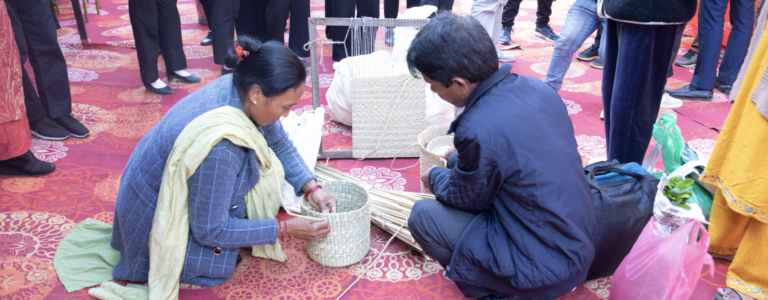
On 10–11 December 2025, Butwal became a vibrant hub of ideas, innovation, and collaboration as the Conclave on Circularity in Nepal: Transitioning into a Sustainable Future – II brought together changemakers from across the country. Hosted at the Butwal Chamber of Commerce and Industry (BuCCI) in Lumbini Province, the event was organized under the Roots of Circularity (RoC) Project, funded by the European Union and implemented by Impact Hub Association (IHA) in collaboration with Impact Hub Kathmandu (IH KTM) and Wildlife Conservation Nepal (WCN), with support from the Ministry of Forests and Environment (MoFE).
Over two days, the conclave created a national platform for dialogue, collaboration, and concrete action toward building a circular, resource-efficient, and regenerative economy in Nepal.
Why This Conclave Mattered
Nepal’s transition to a circular economy requires partnerships, practical tools, and bold leadership. The conclave was designed to bring together voices from the private sector, civil society, government, academia, youth communities, and the innovation ecosystem to exchange knowledge, share experiences, and spark new collaborations.
Through an inclusive and participatory approach, the event aimed to:
- Strengthen cross-sector partnerships
- Empower emerging leaders and young innovators
- Showcase real-world circular business models
- Accelerate the growth of Nepal’s circular economy ecosystem
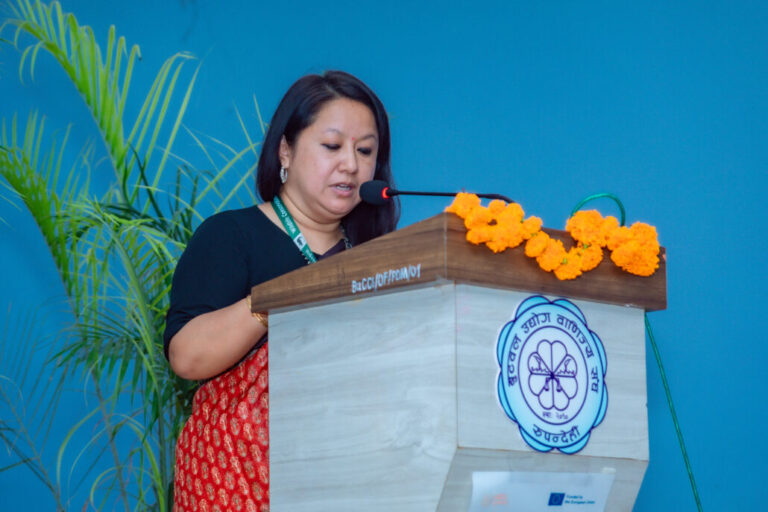
A Meaningful Opening
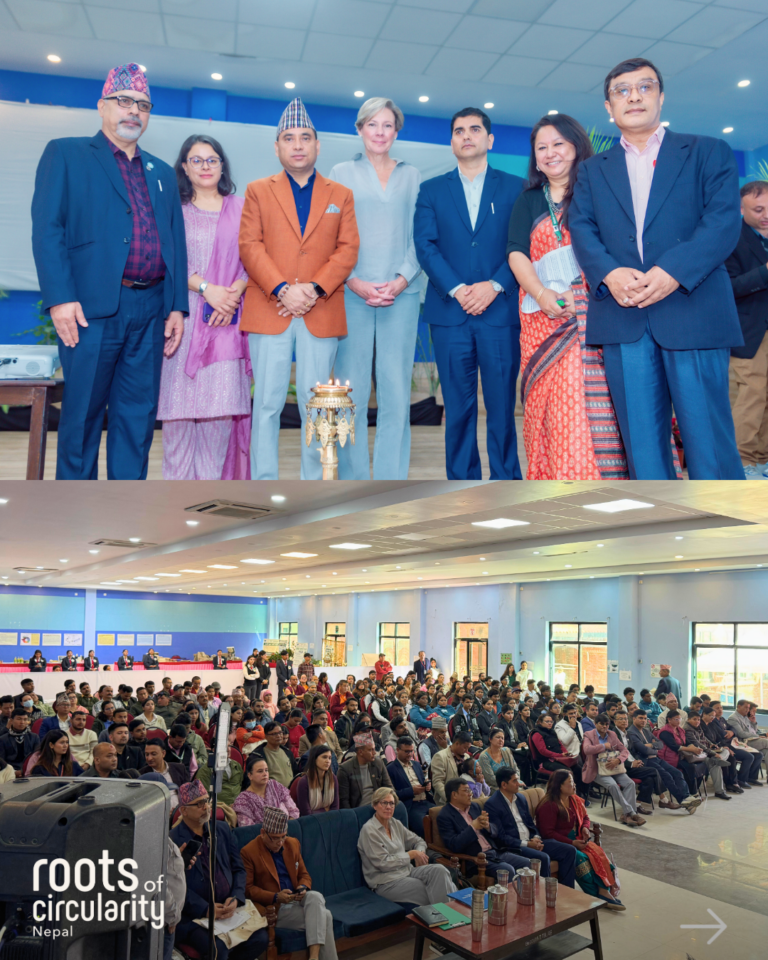
The conclave opened with a traditional diya-lighting ceremony, symbolizing collective responsibility and a shared commitment to sustainability.
The inaugural session featured high-level addresses from government leaders, development partners, academia, and the private sector, including:
- Hon. Prachanda Bikram Neupane, Minister for Industry, Tourism, and Transport, Lumbini Province
- H.E. Veronique Lorenzo, European Union Ambassador to Nepal
- Mr. Narad Gautam, Secretary, Ministry of Industry, Tourism, and Transport
- Prof. Manik Ratna Shakya, Dean, Lumbini University
- Mr. Hari Prasad Aryal, President, Butwal Chamber of Commerce and Industry
A highlight of the opening was the recognition of the first cohort of Roots of Circularity (RoC) Lumbini incubatees. Certificates were awarded to enterprises that successfully completed the RoC Incubator Program, marking their transition toward more sustainable and circular business models. It was a powerful moment celebrating tangible progress.
A Diverse and Engaged Community
The conclave brought together a rich mix of stakeholders, including:
- Students and youth from environmental science, engineering, and business disciplines
- Entrepreneurs, CEOs, sustainability officers, start-ups, and green enterprises — including RoC Lumbini Cohorts 1 and 2
- Civil society organizations and community-based groups
- Government representatives from federal, provincial, and local levels
- Academics, researchers, and partner universities
- Influencers and public figures advocating for climate and sustainability
Day 1
The first day blended big-picture conversations with hands-on action. A lively Circular Enterprise Market showcased innovative business models from RoC incubatees and partners, creating meaningful exchanges between entrepreneurs, policymakers, and development actors.
Participants also experienced circularity in action through a live Waste Cotton Making Hub, where discarded textiles were transformed into reusable materials for mattresses and cushions for schools and old-age homes in Lumbini.
A high-level Round Table explored policy, business innovation, and the role of education and youth in advancing Nepal’s circular economy. The day concluded with practical workshops on designing circular business models, integrating circular principles within CSOs and communities, and creative upcycling through jewelry-making from recovered metals.
Day 2
The second day centered on strengthening skills and turning ideas into lasting commitments.
At the Student Innovation Hub, young participants explored circular economy principles through interactive sessions that challenged them to rethink resources, waste, and value creation.
A World Café on Sustainability brought participants together in small-group discussions to exchange circular business success stories, resource efficiency strategies, and insights on private sector leadership in sustainable innovation.
Workshops continued throughout the day, focusing on co-creating sustainable products and services while fostering stronger collaboration between enterprises and civil society actors.
Looking Ahead
The conclave closed with a synthesis of key insights and collective commitments, presented by the Roots of Circularity team, followed by certificate distribution to participants.
A shared message emerged clearly: Nepal’s circular transition depends on aligned policies, innovative enterprises, forward-thinking education systems, and active community engagement.
The momentum for circular transformation is growing — driven by entrepreneurs, students, policymakers, and communities ready to shape a more sustainable future together.