
Lahore, Pakistan | September 2025
In September 2025, the British Council invited Roots of Circularity to be at Moving the Needle, a regional symposium exploring the intersection of fashion, circular economy, climate action, and cultural heritage across South Asia and the UK.
The invitation recognised Nepal’s growing contribution to circular economy practice and the role of Roots of Circularity in translating global concepts into locally grounded action. The programme brought together designers, entrepreneurs, policymakers, and ecosystem leaders from Pakistan, Nepal, Sri Lanka, and the United Kingdom.
Hosted at the Alhamra Arts Council, the symposium opened with an exhibition by Pakistani university students showcasing sustainable and circular fashion designs. The projects featured recycled materials, vegan fabrics, chemical-free dyes, and repurposed waste—demonstrating how youth-led innovation can anchor circularity in culture and creativity.
Throughout the symposium, discussions explored themes such as:
- Resilient design and climate adaptation
- The role of heritage in sustainable production
- Women-led entrepreneurship in textiles and crafts
- Circular economy as a people-centred, not purely technical, transition
A keynote session on “Resilient Design: Bridging Climate, Heritage and Innovation” highlighted the power of language, policy, and perception in shaping climate and sustainability narratives, an insight that strongly resonated with the Roots of Circularity approach.
Showcasing Nepal’s Circular Economy Experience
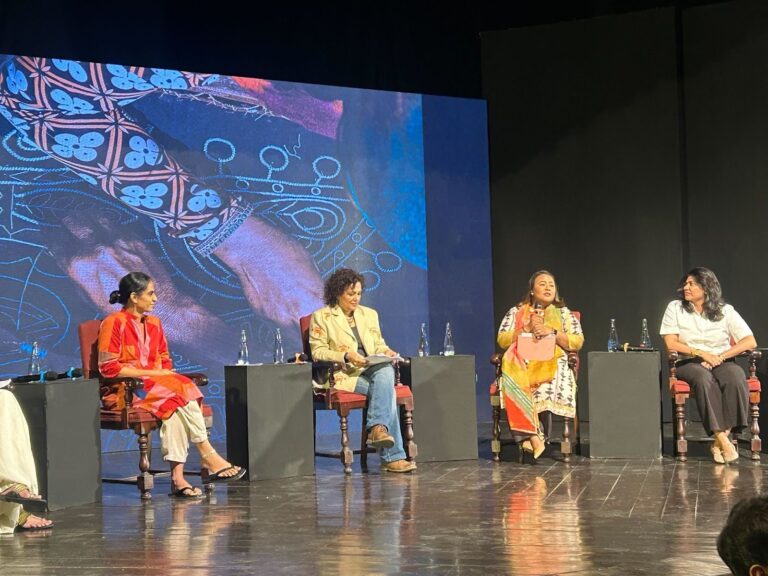
Roots of Circularity was featured in the closing panel, “Unlocking Innovation: Insights from Pakistan, South Asia and the UK,” alongside leaders from Pakistan, Sri Lanka, and the UK. The session explored how circular economy principles are practiced across different cultural and economic contexts.
Nepal’s experience highlighted a key insight: innovation in circular economy does not begin with technology alone, but with mindset shifts—how entrepreneurs perceive their businesses, resources, and responsibilities. By creating safe spaces for reflection, storytelling, and peer learning, Roots of Circularity has enabled enterprises to reimagine their models and rebuild confidence.
Case studies shared during the panel included Hatti Hatti Nepal, an enterprise that entered the incubation programme at a critical moment and has since rebuilt its operations, expanded employment, and reconnected with its founding values. Such examples illustrated how empathy, listening, and trust are essential components of circular systems.
Women, Heritage, and Systems Change
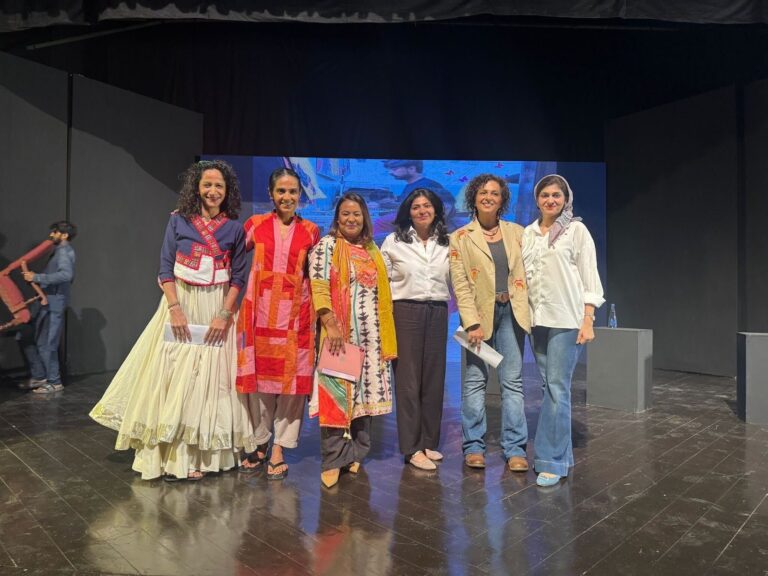
On the second day of the symposium, Roots of Circularity contributed to the panel “Faultlines of Fabric,” which focused on women-led enterprises in the textile and craft sectors. Speakers from Pakistan and the region shared how empowering grassroots artisans not only generates livelihoods but also preserves cultural knowledge and heritage.
These discussions closely mirrored the Nepal context, where Roots of Circularity has supported enterprises such as Anju Sanitary Napkin, Tharu Hastakala, Eco Sathi Nepal, Deego Nepal, Rekriti, Duluwa Outdoors, and others. By centering local skills and stories, the project has demonstrated that circular economy practices have long existed in Nepal, they simply needed recognition and amplification.
Building Bridges Across Borders
The symposium concluded with a gala dinner hosted by Her Excellency Jane Marriott CMG OBE, British High Commissioner to Pakistan, reinforcing the importance of cross-border collaboration in advancing sustainable and creative economies.
Participation in Moving the Needle not only strengthened regional connections but also reaffirmed Nepal’s role in global circular economy conversations. It showcased how initiatives like Roots of Circularity—grounded in community, empathy, and long-term systems thinking—can influence international dialogue while remaining deeply local in practice.
As Roots of Circularity enters its third year of implementation, international recognition such as this underscores the value of sustained ecosystem-building efforts. The project continues to champion a vision where circular economy is inclusive, culturally rooted, and driven by people.